Abu Dhabi issued 1,814 new licences while Swiss banks cut 2,345 jobs
Written by

Huan koh
Published on
September 14, 2026

Copy link
Link copied!


Two wealth centres reported the same six months and described different worlds. The direction of tax policy across 92 countries explains part of why.
Financial centres publish their scoreboards on their own schedules, so they rarely land together. Three arrived within about ten days of each other this month. Abu Dhabi Global Market reported growth in every category it counts. The Swiss Bankers Association reported record assets alongside a second year of falling employment. The House of Lords Library set out a British tax take heading for its highest recorded share of national income. Then on 8 September the OECD published its annual review of tax reforms across 92 countries, and the direction it describes is consistent with all three. Read together, these are not four separate stories. They are one story about where capital is managed from, and what governments are doing to the people who own it.
Abu Dhabi's financial centre grew every category it counts, and fund managers fastest
Start with the newest of the three centres, because its numbers are the cleanest. Abu Dhabi Global Market published its first-half results on 8 September. It counts entities rather than money, which makes the figures checkable in a way that headline asset numbers rarely are.
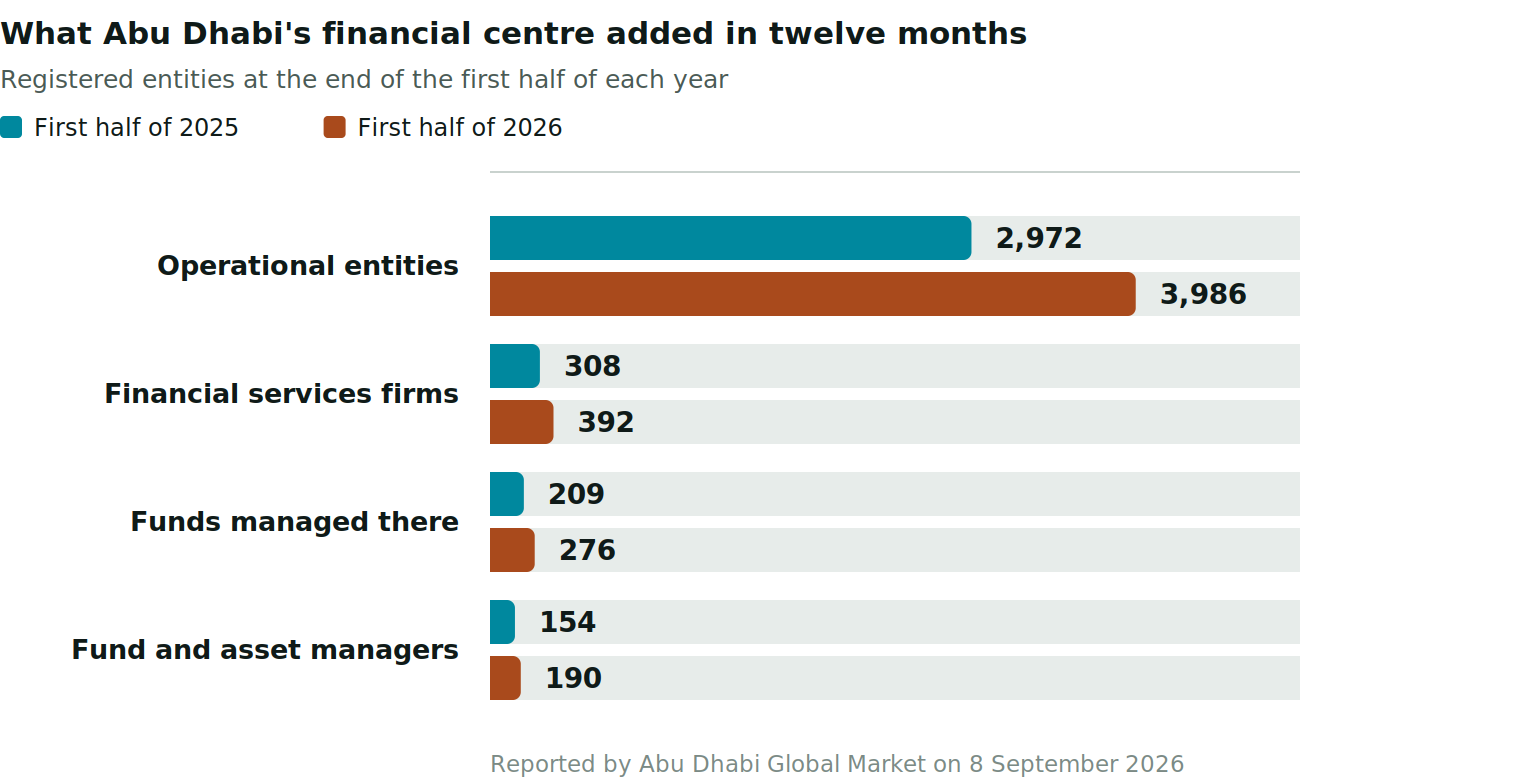
Operational entities rose from 2,972 to 3,986, a gain of 34%. Financial services firms rose from 308 to 392, up 27%. Funds managed from the centre rose from 209 to 276, up 32%. Fund and asset managers rose from 154 to 190, up 23%. The centre issued 1,814 new licences in the half and holds 13,974 active ones. Its stated workforce is 49,027. It also reported assets under management up 54% on the year, and that figure deserves a caveat the others do not. No absolute value was published and the term was never defined, so the percentage cannot be checked against anything. Use the entity counts, which are registry facts.
Swiss banks still manage more foreign money than anywhere else
Switzerland reported the same period, and the contrast is instructive rather than simple. It is the older centre by about two centuries, which is worth holding in mind when comparing growth rates. A base that large does not grow at 34%. The Swiss Bankers Association published its Banking Barometer at the end of August. Total assets under management reached CHF 9,729.1 billion at the end of 2025, up 4.8% in the year. They crossed CHF 10 trillion by May 2026.
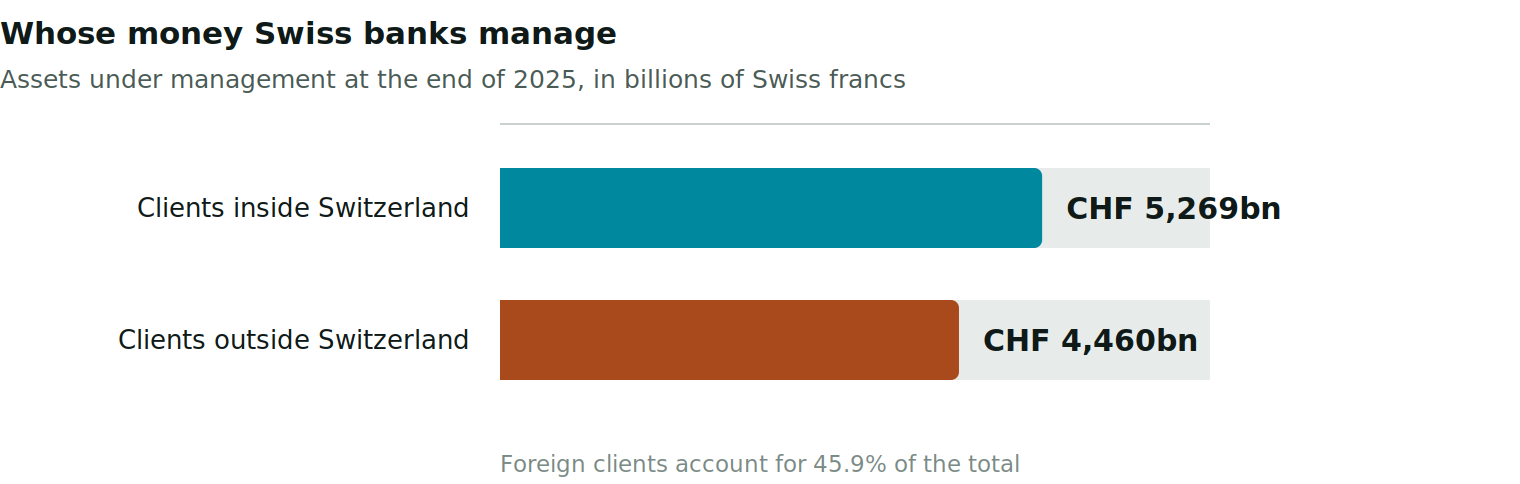
Domestic clients accounted for CHF 5,268.7 billion and foreign clients for CHF 4,460.4 billion. So 45.9% of the money comes from outside the country. Cross-border wealth management for private clients reached CHF 2,945.7 billion in 2025, up 7.6% after adjusting for currency. Aggregate operating profit was CHF 73.8 billion, up 5.8%. Commission income rose 6.5% while net interest income fell 0.8%, which is the shape you would expect from a sector earning more from managing money and less from holding it. On the money itself, Switzerland is not in retreat. That is the part most commentary gets right.
Swiss banking employment fell by 2,345 posts in a single year
The part most commentary skips is who is doing the work. That number moved the other way in the same report, and it is the one a family should care about most. Money can be managed from anywhere. The people who manage it cannot, and a centre losing them is telling you something its asset total will not show for years.
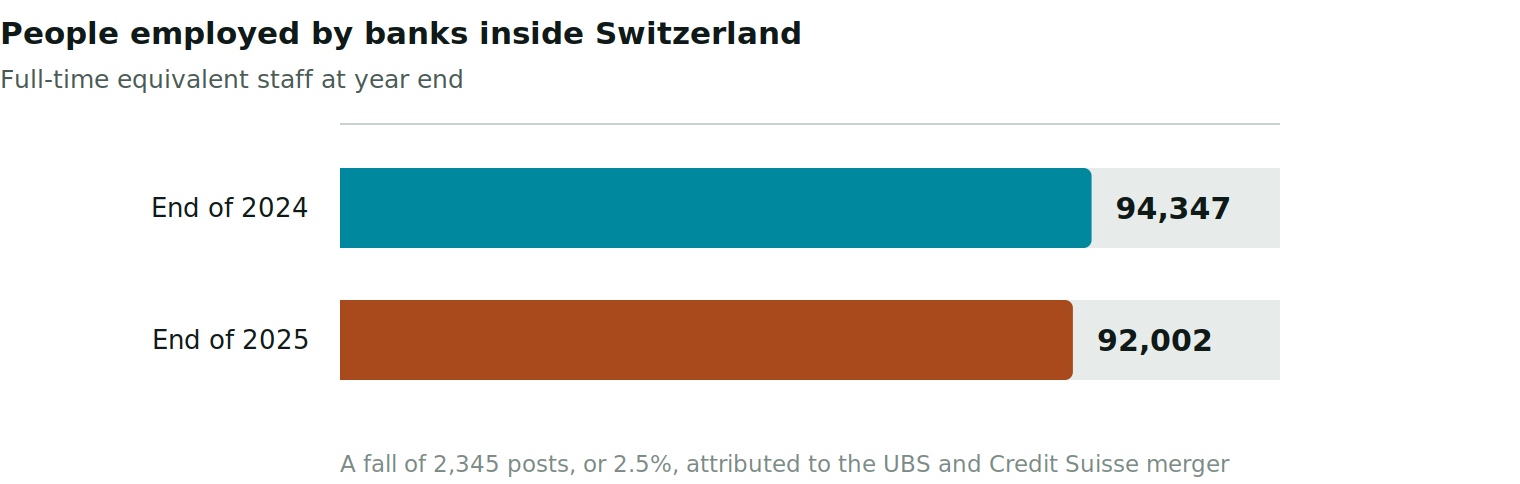
Domestic banking employment fell to 92,002 full-time equivalents at the end of 2025. That is down 2,345 posts, or 2.5%. It fell a further 1.4% in the first half of 2026. Unemployment within the sector rose from 3.3% in December 2025 to 3.5% by June 2026. The association attributes the decline to the merger of UBS and Credit Suisse, which is a specific cause rather than a general one. But consider what the two Swiss numbers say together. Assets rose while headcount fell for a second year. Abu Dhabi's headcount rose alongside its entity counts. A family choosing where to base a structure is choosing between a place consolidating and a place hiring.
Britain's tax take is at 36% of national income and forecast to reach 38.5%
The third publication is about the other side of the same decision. Choosing a centre is one half of the question. The other half is what happens to wealth that stays where it is, under a government that needs money. Britain is the clearest current example, and it publishes enough detail to see the trajectory. The House of Lords Library set out its fiscal outlook on 3 September.
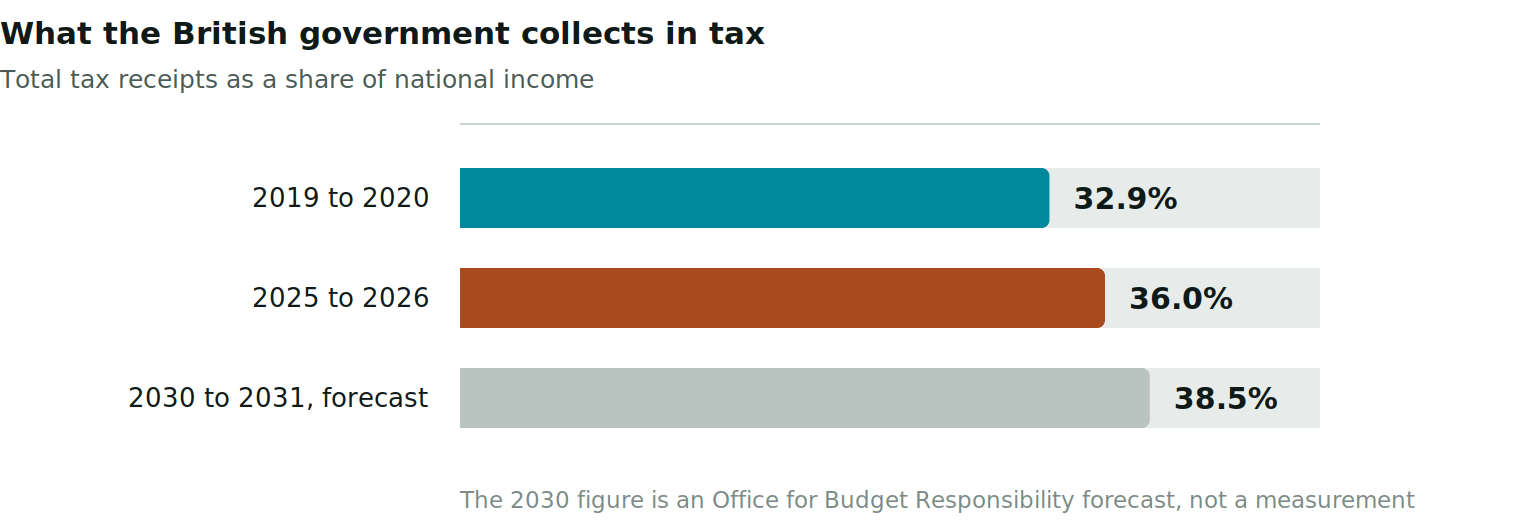
The tax take was 36.0% of national income in 2025 to 2026, against 32.9% in 2019 to 2020. It is forecast to reach 38.5% by 2030 to 2031, which would be a record. That last figure is a forecast rather than a measurement, and should be quoted as one. The deficit was £130 billion, or 4.2% of national income. National debt stood at £2,985 billion in July 2026, about 94.1% of national income. A Budget is set for 28 October under a new Chancellor. Several capital gains measures have been reported as under consideration, including an exit charge on people leaving the country. Nothing has been announced, and similar reports circulated a year ago without result. Treat the trajectory as the fact and the specific measures as speculation.
The OECD looked at 92 jurisdictions and found the same direction in most of them
Behind all three scoreboards sits a broader pattern. On 8 September the OECD published the eleventh edition of its annual survey of it. The report covers tax reforms introduced or announced during 2025 across 92 countries. Its findings are directional rather than numerical. Personal income tax is being used mainly to increase progressivity. Several countries raised top rates, or revised how they tax dividends and capital gains. The average combined corporate tax rate was stable for a third consecutive year. That last point is the one to hold onto. Governments under fiscal pressure are no longer reaching for the corporate rate, because it is competed over internationally and everybody knows it. They reach instead for the taxation of individuals and of investment income, where the competition is slower and people move less easily.
What this means for families choosing a jurisdiction, families already in one, and anyone watching the British Budget
For a family choosing where to base a holding structure or a family office, these reports are more useful than any ranking. Abu Dhabi is growing quickly from a small base and is hiring. That means staff are available and the regulator has capacity to process an application. Switzerland holds far more money and has a deeper bench, but it is consolidating rather than expanding. Singapore sits between the two on both measures. The right question is not which centre is winning. It is which one will still have the specific people your structure depends on in five years, and whether you can meet them before you commit. That is answerable by asking, and almost nobody asks.
For a family already established somewhere, the OECD finding is the one to act on. The direction across 92 countries is higher personal rates and tighter treatment of dividends and capital gains. A structure optimised for the corporate rate is therefore optimised for the number least likely to change. Look instead at where your distributions are taxed. Look at where your beneficiaries are resident, and at what happens if one of them moves. Those are the variables governments are actually adjusting. A structure that survives a change in the corporate rate but fails when a beneficiary relocates has been built against the wrong risk. That is far more common than it should be.
For anyone with British exposure, the 28 October Budget deserves preparation rather than prediction. The tax take is 36.0% now and forecast to rise. The fiscal position described in the Lords Library briefing does not leave a great deal of room. What is being reported about exit charges and the uplift on death is speculation. Comparable stories ran last year and came to nothing. The useful preparation is knowing your own position before any announcement. Establish what you hold and where it is held. Establish what a disposal would trigger, and what a departure would trigger. Families who know those answers can act within a week of a Budget. Families who do not will spend that week finding out, which is when the options are fewest.
Our blog
Latest blog posts
Tools and strategies modern teams need to help their companies grow.